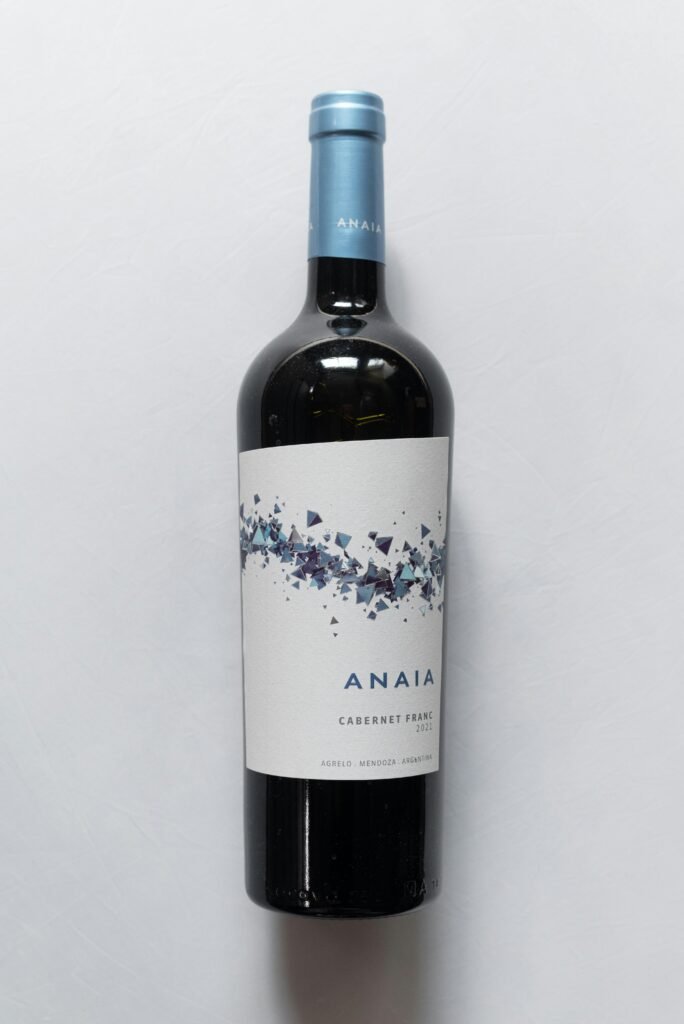
Nearly noble grape varieties: Cabernet Franc
Cabernet Franc is one of the most important “founding” grapes of the Bordeaux family and is genetically older than both Cabernet Sauvignon and Merlot. Without Cabernet Franc, the classic Bordeaux blend would not exist as we know it. It contributed genetics to several of the region’s most important grape varieties. In this post we explore the grape in more detail and why it deserves its place as a Nearly Noble variety.
About the grape
Cabernet France is an early to mid budding variety, which produces small to medium sized bunches of conical shape. The vines produce small, dark blue-black berries with fairly thick skins. This contributes color, tannin, and resistance to some vineyard diseases. Cabernet Franc typically ripens 1–2 weeks earlier than Cabernet Sauvignon. This makes it valuable in cooler climates where late-season rain or frost can threaten harvests. In the right conditions it can become relative vigorous in growth and yields.
Why it deserves its nearly noble status…
Without it we wouldn’t have a number of other significant grape varieties – Cabernet Sauvignon, Merlot and
Carmenère are all children of the Cabernet Franc grape.
It’s ability to reflect the terroir – Whether its a refined Chinnon, structured Bordeaux, ripe, spicy and concentrated Hungarian Villany example or a plush new world one, Cabernet has the ability to reflect the place its grown.
Its ability to age with quality – Cabernet Franc is a superb wine for aging. With time ripe red fruits develop into dried cherry and fig, herbal notes convert into cigar box and tobacco leaf, floral notes develop into dried violets and mineral notes become more earthy.
It pairs with loads of foods – High acidity and herbaceousness mean it is one of only a few reds which pairs with both fatty, meaty dishes and green, herby vegetables and tomato based sauces.
A distinctive nose – The grape tends to have a characteristic herbaceous green bell pepper nose which makes it pretty easy to spot in a line up. Especially when combined with the aromas of violets.
Profile
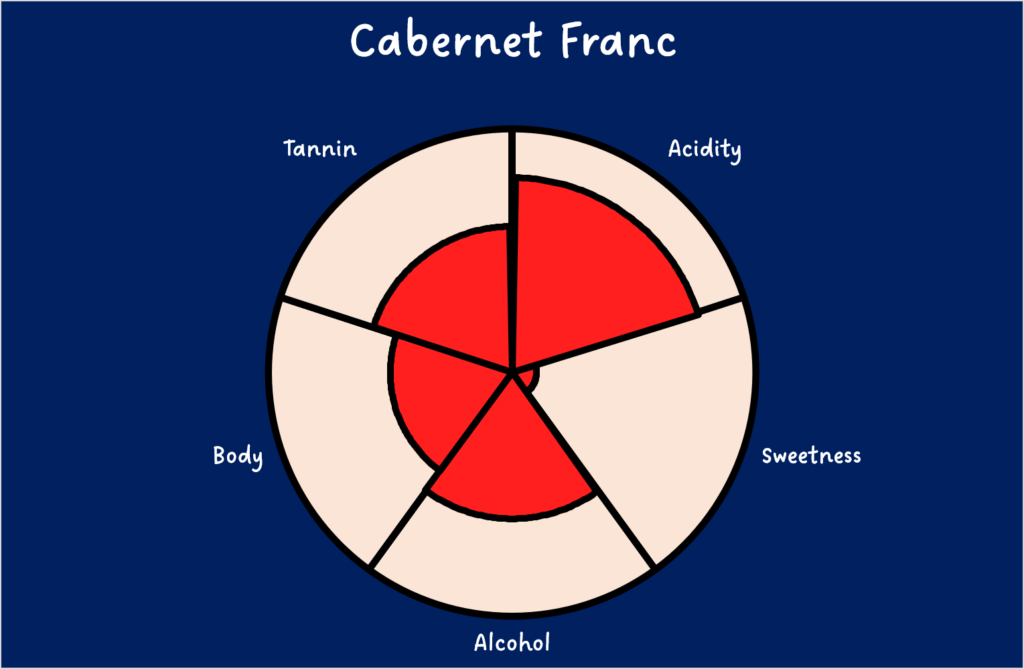
But it ranges from:
- Medium+ to High acidity
- Usually a dry style, although ripeness levels can be mistaken for sweetness
- Medium to High alcohol
- Medium body
- Medium plus tannins
The primary fruit flavours usually consist of red cherry, raspberry and strawberry in really light styles. Red plum, and in warmer climates even blackcurrant. Characteristic green bell pepper, dried herbs, tomato leaf, and green olives in some styles. Floral aromas of violet, lavendar and rose petals. Mineral notes of graphite or pencil shavings, wet stone, sometimes some chalk and earthiness. Warmer regions tend to bring out black and white pepper, clove and light baking spices. With oak and age will come vanilla, toasted spice, tobacco, dried cherry, fig, leather, forest floor and mushroom.
Production
The variety generally is thought to thrive in cool to moderate climates, but warmer climates will produce more concentrated examples. In France the Loire (especially Chinon) and Bordeaux (where it is usually blended). In Italy it can be found in Tuscany, Friuli-Venezia Guilia, Veneto and is often blended. In Hungary, in Villány where it is the signature grape and produces riper, spicier, fuller-bodied styles which can reach 18% abv and above in warm years. It can also be found in California, Washington State and over the border in Niagara (Canada). There are also plantings elsewhere in the new world – Argentina, South Africa, and Australia. Styles vary enormously.
You’ll like Cabernet Franc if you like:
Pinot Noir, but crave more structure, Merlot, but prefer a drier more herbal and refined wine, Sangiovese, Syrah, but want something more light bodied.
So what do you think about Cabernet Franc. It truly deserves its place as a nearly noble grape in my view. But do you you prefer the light Chinon style or are you a heavy Hungarian style enthusiast? As always, drop me a line and let me know! In the meantime, keep exploring this beautiful planet we live on, one glass at a time!