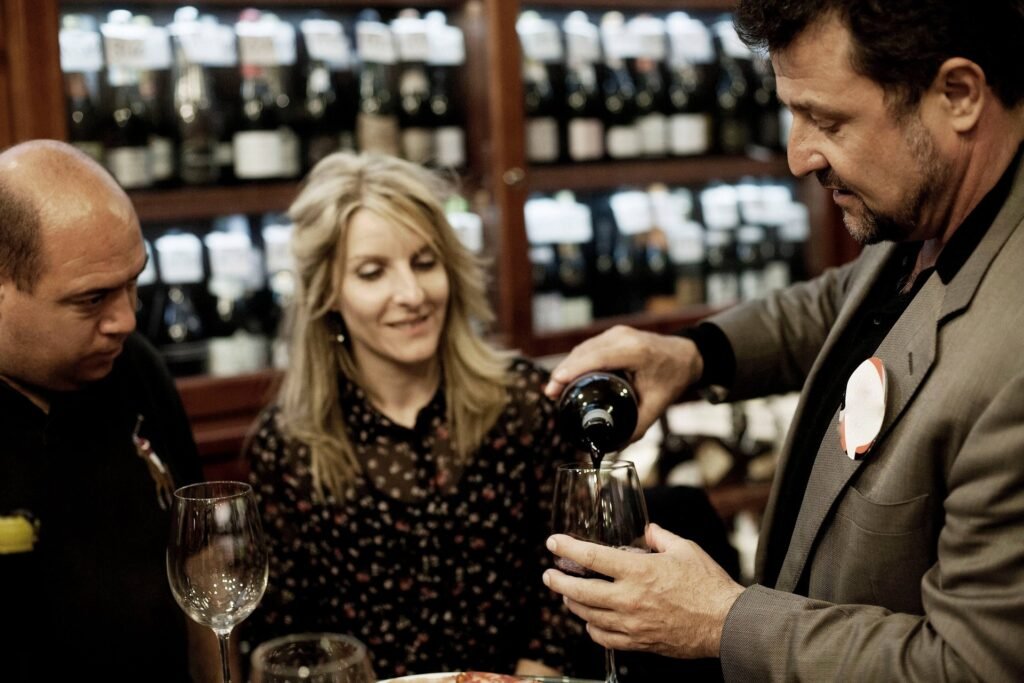
OK, we’ve got 10 minutes, lets go…
Minute 1-2
You’ll want to know your most common types of wine. So we have:
- White wine – usually green-lemon through to amber / brown in colour. The vast majority are lemon / yellowy in colour.
- Red wine – usually purple, ruby or garnet in colour.
- Rosé wine – usually light to darker pink / orange in colour.
- Sparkling wine – has bubbles, usually white or rosé in colour (occasionally red).
- Fortified wine – wine with extra spirit added (higher in alcohol) – changes the flavour and sweetness.
The colour in wine comes from the skins not the juice. So:
- Red wine is made using black grapes in which the skins soak in the juice
- Rosé wine is made using black grapes in which the skins soak in the juice for a short period only
- White wine can be made using black or green grapes where only the juice is used
Minute 3
Sweet and dry wines:
- Sweet wines are usually easy to spot
- The opposite of sweet is dry – the wine has little or no noticeable sweetness
- Off-dry – the wine is a little bit sweet
Vintage:
- Vintage is the year the grapes were harvested (not when the wine was bottled)
- NV or Non-Vintage – a wine made with grapes harvested in a number of different years
Minute 4-5
Reading a wine list:
- Grape varieties:Unless you’ve got a particularly impressive memory and a lot of spare time, you’re not going to learn all the grape varieties. And frankly, you don’t need to. Common white varieties are:
- Chardonnay – quite often oaked so you might smell and taste smoky notes
- Pinot Grigio / Pinot Gris – makes light, dry and fresh wines usually with orchard fruit, citrus and some stone fruit
- Sauvignon Blanc – quite aromatic so you might smell something fruity or floral. High in acid – it will make you salivate
- Red grape varieties include:
- Pinot noir – light and fruity usually with red fruit – cherry / strawberry
- Merlot – slightly heavier with plum, black cherry and sometimes chocolate flavours
- Syrah / Shiraz – slighter heavier still with dark fruit and often a slightly peppery flavour. Sometimes smoky and meaty.
- Cabernet Sauvignon – heavier still with darker fruits (blackcurrant, blackberry), sometimes notes of cedar and mint.
- Countries and regions:
- Hopefully you are familiar with countries, regions are areas within them that make wine. Come common ones are:
- Champagne (sparkling), Bordeaux (Red), Burgundy (Red and Chardonnay), Rioja (mostly Red), Tuscany (mostly red), Marlborough (mostly white, esp. Sauvignon Blanc), Barossa (Austrailian red), Napa (Cabernet Sauvignon)
- Hopefully you are familiar with countries, regions are areas within them that make wine. Come common ones are:
- Don’t panic! Wine lists have style clues:
- Aromatic – often fruity, floral or spicy
- Mineral – flinty or salty notes usually
- Elegant – light in style and more restrained
- Robust – a strong, powerful, full-flavoured wine
- Refreshing or Crisp – good acidity
- Complex – lots of different flavours and often aged
- Buttery – usually has oak in it
Minute 6-7
Checking a wine:
Remember this… If you are brought the wine by a waiter and asked to check it, they are asking you to check if its faulty, not if you like it. So check the following:
- The label – is it what was ordered?
- The colour of the wine – is it the expected colour.
- The clarity of the wine – is it free of unexpected particles. Some wines have sediment, but most wine is not hazy.
- The cork – does it look dried out or damaged? Does it smell strongly of damp cardboard? If it does, the wine may be faulty
- Smell the wine – does it smell like you expected (fruity, aromatic, etc…)
- Taste the wine – does it taste like you expected?
- Check for faults:
- If you smell damp cardboard, musty basement or mouldy newspapper it may be cork taint (referred to as corked). This only usually occurs in a wine which has a cork!
- If the wine tastes flat or stale, or like bruised red apple, it may be oxidised
- If it smells or tastes of vinegard or nail polish remover it may have volatile acidity
- If any of these things are true, ask the waiter to check it. Most good restaurants will bring you another bottle.
- If everything seems as you expected simply say, ‘Yes, that’s fine, thank you.’
Minute 8
How to comment on a wine:
Use this formula – What is it – What you notice – Whether you like it
- You could observe that it is a dry wine, that its quite fruity and refreshing and you like it.
- You could observe that its quite full-bodied (heavier), with dark fruits and some spice, but its not really your style.
- Or you could simply state that you aren’t really sure what you’re picking up, but you like it.
Don’t pretend that you know more than you do. Keep it simple. Here is your get of jail free card… A great trick is to say something like, “There’s a flavour or aroma I’m picking up, but I’m not sure what it is, what are you noticing.” This puts the focus onto someone else and takes the pressure off you.
Minute 9
Things to avoid which make you look clueless:
- Don’t hold your glass by the bowl, hold it by the stem.
- Don’t assume more expensive is better or that you’ll like a more expensive wine.
- Pretend you can taste flavours you can’t.
- Feel embarassed because you don’t recognise a wine.
- Don’t tell people you don’t like wine, if what you mean is, you don’t have much experience with wine.
- Don’t forget to drink water with your wine, it will keep you hydrated and help you avoid the hangover.
- Don’t drink too much wine – especially if you need to make a good impression. It may help with the nervous, but it can also loosen up your inhibitions, which it often not a good thing.
Minute 10
Revision:
Remember…
- Main types of wine: White, rosé, red, sparkling and fortified
- Styles: dry and sweet
- Vintages: the year of the harvest or NV (non-vintage) made from several different year’s grapes
- Grape varieties: Chardonnay, Pinot Grigio and Sauvignon Blanc (white); Pinot Noir, Merlot, Syrah/Shiraz and Cabernet Sauvignon
- Big regions: Champagne, Bordeaux, Burgundy, Rioja, Tuscany, Marlborough, Borossa and Napa
- Wine list clues: Aromatic, Mineral, Elegant, Robust, Refrehsing/Crisp, Complex, Buttery
- Checking a wine: looking for faults (wet cardboard, bruised apple, vinegar)
- Commenting on a wine: What it is, What you notice, Whether you like it
- Faux pas: Holding the bowl, buying expensive, pretending to taste things, not hydrating, drinking too much
Good luck my friend! You’ve got this!
Don’t forget to come back for the 30 minute version or my wine basics series to learn how to be even more impressive with wine!