Nearly noble grape varieties: Tempranillo
Without it Rioja wouldn’t be Rioja, but does Tempranillo really justify status as a Nearly Noble grape? 80% of the plantings are in Spain, accounting for over 230,000ha of plantings which make it Spain’s most planted variety. It is also one of the five varieties approved for use in Port. And whether in Spain or elsewhere the variety forms the backbone of plenty of high-quality and age-worthy wines. But it is good enough to be Nearly Noble?
About the grape
The grape is believed to be have introduced to the Iberian Penisular around three thousand years ago. The name Tempranillo means, “the early one” referring to it being one of the early ripening grapes in Spain. It is early budding and has relatively poor resistance to disease and weather, which mean it can suffer from issues with spring frosts. The bunches are generally conical and usually compact with shoulders and the berries themselves are medium-sized and round. The compact bunches mean it sometimes suffers with rot issues. Skins are relatively thick and dark in colour. In the right conditions is can become quite vigorous.
Why it deserves its nearly noble status…
Spain’s premier grape variety – This variety is the undisputed champion of Spanish viticulture. It competes with Cava as the one of the most exported Spanish varieties when it is utilised in Rioja.
Quality wine and Port – It is not unusal to find a Tempranillo wine which can age 30 or more years when well made. Examples are age worthy, complex and often more concentrated. Over the border from Spain, it is used to create some of the best port wines in the world.
Versatility – Probably best known for fuller bodied red wines, it can also be used to make sparkling, rosé and lighter red styles.
It works well with food – Wines from this variety pair well with a range of foods including meat, cheese and vegetable dishes. The savoury profile found in aged wines works especially well with meat dishes.
Ubiquity – This is the fourth most planted variety in the world!
Profile
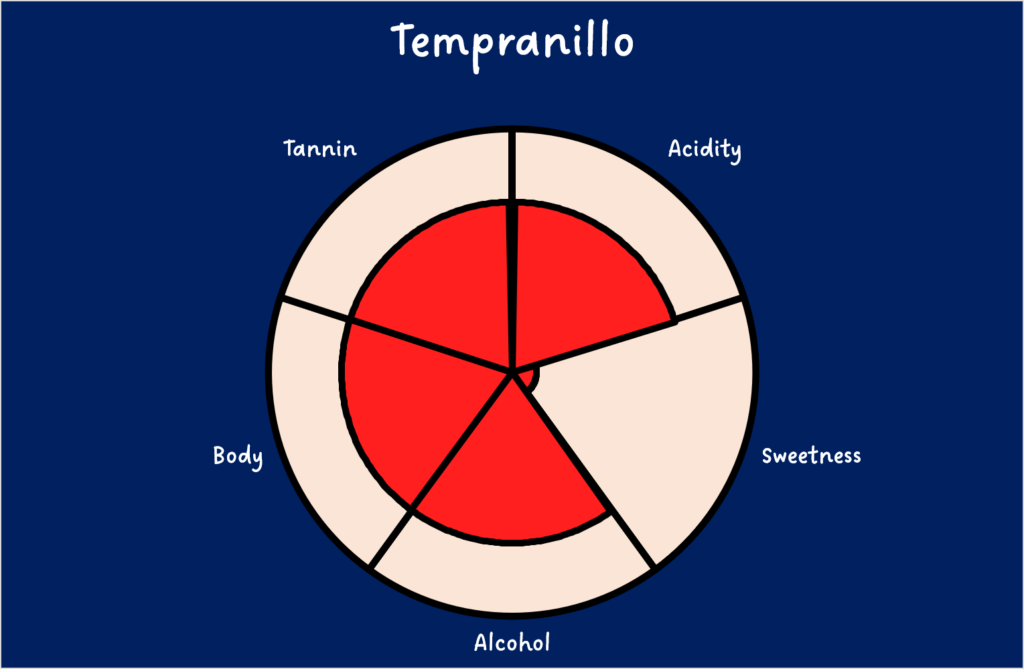
Tempranillo reflects its conditions, but generally expect:
- Medium to Medium-High acidity
- Usually a dry style
- Medium to High alcohol
- Medium to High Body
- Medium to High tannins
Younger wines will be dominated by bright cherry and strawberry flavours, which with age become more complex and concentrated. With age an oak it can develop dried herbs, vanilla and coconut flavours (from American Oak) as well as Tobacco. With a good amount of age it can take on leather characteristics, cedar, dried fig, mushroom and forest floor. Mouthfeel is generally medium to full-bodied, with usually decent tannin levels which these days are smoother and rounder in Rioja blends, and tend towards being more grippy in Ribera Del Duero examples. Warmer regions will tend towards darker fruit such as blackberries and with age the wines tend to become more silky.
Production
It is huge in Spain, especially in Rioja and Ribera del Duero, but can also be found in Toro and La Mancha. It can also be found in Portugal where it is known as Tinta Roriz. Argentina also has some plantations, as do the Chile, Mexico, United States and Australia which tend to be more warmer climate examples.
You’ll like Malbec if you like:
Sangiovese, Merlot, Cabernet France, Gernache and Nebbiolo.
This Spanish hero is no doubt a versatile and quality producing variety which has found fame on the world stage largely through Rioja and Port. The quality of the wines it produces are probably its greatest claim to Nearly Noble status, but there are others. So, next time you reach for a Rioja, a Port or even a glass of your favourite Ribera del Deuro blend, you can decide for yourself. And in the meantime, keep exploring this beautiful planet we live on, one glass at a time!