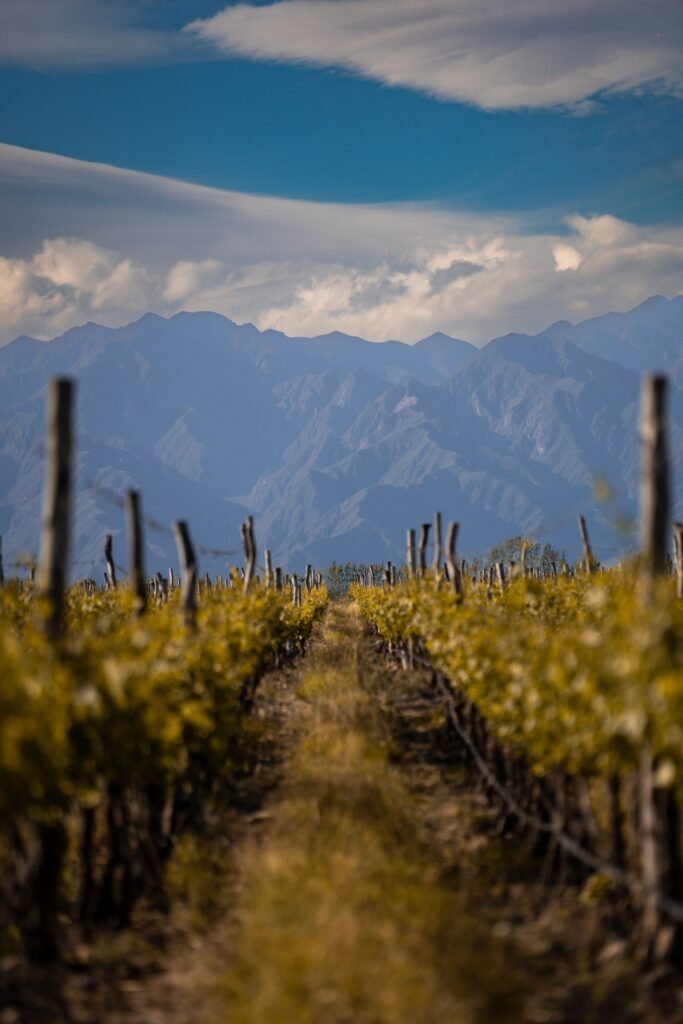
Nearly noble grape varieties: Malbec
Famous in both Cahors (France), Mendoza (Argentina) and the central valley (Chile) Malbec has become famous for its inky violet tones and pairing perfectly with BBQ food. But is there more to this variety? And is there enough to justify its status as a nearly noble variety? In this post we find out.
About the grape
Malbec is a purple grape that has a thick skin, and loves the sun. In France clones tend to produce larger berries, whereas Argentine clones are smaller berries and slightly more compact clusters. It buds earlier in the season and ripens mid-season and has the potential to produce high yields. Bunches tend to be medium to large in size and conical or pyramidal in shape, but are generally loose or mediumly compact. Wings frequently develop on the bunches, usually from the top of the cluster. It tends to be prone to frost, downy mildew and rot.
Why it deserves its nearly noble status…
An important heritage – Malbec was historically one of the original six blending grape in Bordeaux and in Cahors it was celebrated by Popes, Kings and Tsars for centuries.
It’s ability to reflect the terroir – Like many noble and nearly noble varieties, the expressions reflect the terrior in which Malbec is grown. In France, it is earth, tannic, structured and rustic; and in Argentina it reaches high levels of acidity, velvety tannins and floral violet notes.
Structural excellence and Ageing potential – Those thick, dark skins mean Malbec has high levels of antioxidants and phenolics. These produce a dense wine with significant structure, which allows it to age for 20 or more years.
It pairs with meaty dishes – The tannins in the wine bind to the dietary proteins in meat, which mean the wine softens. The high altitute expressions tend to have high acidity which cleanses the palate, cutting through rich foods.
A firm consumer favourite – This is not a wine which has risen to fame through relying on heritage alone, from the early 2000s consumers have chosen Malbec as a result of its incredibly smooth, rich and high-quality complexity at a very accessible price point.
Profile
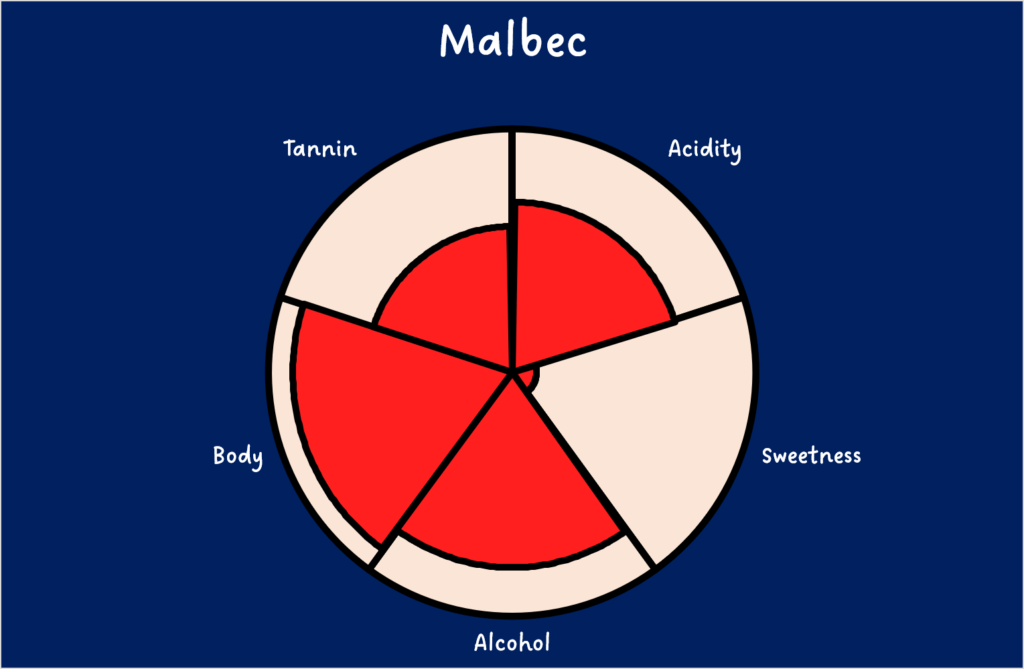
Given its two very different expressions, Malbec can range quite a bit, but generally will sit in the ranges below:
- Medium to High acidity (depending on location.
- Usually a dry style, although ripeness levels can be mistaken for sweetness
- Medium+ to High alcohol
- Medium+ to High Body
- Medium+ tannins (but often smooth and well integrated)
Influenced by location, Malbec is well known for its dark fruit, smoky finish, pepper notes and vanilla, coconut and chocolate influences from oak. Typical fruits will include black cherry, raspberry, plum and blackberry, progressing through this range as climate warms. Examples in Argentina are typically characterised by floral notes of violet, while French examples are typically more fruit forward and occasionally a little green. Alcohol levels are higher in South America typically. The texture can be velvety, full bodied and the finish generally a little shorter than Cabernet Sauvignon. With age, characteristics of tobacco leaf, minerality and leather can become more evident.
Production
The variety was once ubiquitous throughout France, but now is focused predominantly in Cahors where it is a requirement that wines contain 70% Malbec in the blend. The variety is also extremely popular in Argentina, where there are 25,000ha of plantations just in Mendoza, with a further 50,000ha in order Argentine regions. There are plantations in Chile, focused largely in the Maule region, but also in Colchagua Valley. Smaller plantations can be found in USA, Italy, South Africa, Australia and New Zealand.
You’ll like Malbec if you like:
Cabernet Sauvignon, Zinfandel (Primativo), Syrah (Shiraz) and Carménère.
So Malbec has become a consumer favourite, but can also boast a heritage and culinary versatility which mean it deserves a place as a nearly noble variety. But which types are your favourites? As always, drop a line and let me know. And whatever you are drinking, keep exploring this beautiful planet we live on, one glass at a time!